Underground Water Tank Systems for Rainwater Management
Underground Water Tank Systems for Rainwater Harvesting
Quick answer: In summary, an underground water tank built from modular cells stores, attenuates or infiltrates stormwater below usable ground space. Additionally, Leiyuan systems use configurable modules with up to a stated 96% void ratio, while final volume, loading, liner, pretreatment, access and discharge design must be verified for each site.
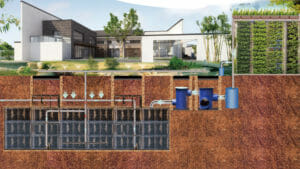
Additionally, underground water tank systems are advanced systems designed for efficient rainwater harvesting and stormwater management. Moreover, These tanks are constructed using modular components that can be easily assembled and customized to fit various site conditions and water storage requirements. Therefore, by placing these tanks underground, they save valuable surface space and integrate seamlessly into the urban landscape.
We are a trusted manufacturer based in China, specializing in OEM production for our partners.
DESIGN LIFE OF UP TO 55 YEARS Constructed primarily from high-purity polypropylene (PP) with excellent toughness, our Modular Rainwater Tanks are resistant to reactions with acids, vinegar, and other substances. For example, They are designed to withstand underground environments, including cryogenic temperatures, with a service life exceeding 55 years. As a result, Additionally, they are 100% recyclable at the end of their lifecycle, supporting environmental sustainability.
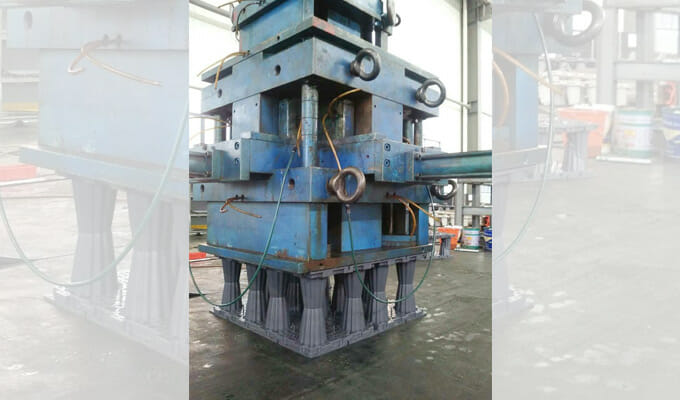
LOADING CAPACITY ABOVE 75 TONS/SQM Leveraging dynamic and logistic principles, and the inherent stability of triangular shapes, our water storage system provides robust and effective source control. In particular, The combination of these design elements ensures retention, storage, and collection at various depths, making it ideal for diverse applications.
HIGH VOID RATIO FROM UP TO 96% Our Underground Water Tank boasts an impressive void percentage of 96%, allowing for the creation of larger subterranean cavities with less space usage. Therefore, This design significantly reduces excavation and land clearing requirements. Meanwhile, The Modular Rainwater Harvesting System can store an unlimited amount of water and effectively manage stormwater runoff, making it a cornerstone of sustainable urban water management.
Comprehensive Modular Solutions
System Configurations and Project Uses
Moreover, Leiyuan Greening Solution offers a wide range of Underground Water Tanks for retention, attenuation, and infiltration of surface or underground water. Likewise, These systems serve as effective harvesting and drainage solutions across various areas. Consequently, The Modular Rainwater Tanks facilitate on-site assembly and interlock to form rafts that provide flood regulation and storage.
Technical Specifications
Void Ratio: Up to 96%
Vertical Loading on Top (23°C): Up to 1029.2 KN/m²
Lateral Loading on Side (23°C): Up to 221.2 KN/m²
Vertical Loading on Top (40°C): Up to 585.73 KN/m²
Lateral Loading on Side (40°C): Up to 159.12 KN/m²
Materials: Virgin Polypropylene or 100% Recycled PP
For context, Richard Heini, a renowned rainwater harvesting expert from the USA, emphasizes that “all water is rain.” Rainwater, as it percolates through soil and stone layers, collects minerals and salts beneficial for human health. Furthermore, Utilizing rainwater through harvesting and recycling reduces the need for water softeners and detergents, promoting energy conservation and emission reduction. However, Scientific rainwater harvesting and storage are key to maximizing the use value of rainwater, ensuring sustainable water management.
Related words Underground Water Tank Modular Rainwater Tanks Rainwater Harvesting System Underground Modular Tank
Modular Stormwater Modular Drainage Modular Storm Water Tanks Modular Stormwater Detention Modular Stormwater Tanks Modular Tanks Modular Water Storage Tank Modular Water Tank
Underground Water Tank Benefits for Urban Management
Meanwhile, as cities continue to grow and climate change intensifies, the need for efficient and sustainable urban water management solutions becomes increasingly critical. Ultimately, Underground water tank systems are at the forefront of addressing these challenges, offering a range of benefits that make them indispensable for modern urban planning.
Underground Water Tank Flow Control
In particular, one of the primary advantages of underground modular rainwater tanks is their ability to manage stormwater effectively. By capturing and storing rainwater during heavy downpours, these tanks help reduce surface runoff, thereby minimizing the risk of urban flooding. This is particularly crucial in densely populated areas where impervious surfaces like concrete and asphalt prevent natural water infiltration.
Below-Ground Space Efficiency
By contrast, unlike traditional above-ground water storage systems, underground modular tanks are installed below the surface, freeing up valuable land for other uses. This space-saving design is ideal for urban environments where land is often at a premium. It allows for the creation of green spaces, recreational areas, or additional infrastructure without compromising water storage capacity.
Underground Water Tank Systems for Sustainable Reuse
Furthermore, underground modular rainwater tanks promote the sustainable use of water resources by enabling the collection and reuse of rainwater. In addition, the harvested water can be utilized for various non-potable purposes such as irrigation, toilet flushing, and landscape maintenance. This reduces the demand on municipal water supplies and helps conserve this precious resource.
Durable Polypropylene Construction
For example, constructed from high-purity polypropylene, these tanks are designed to withstand harsh environmental conditions and have a service life of up to 55 years. As a result, their robust construction ensures that they remain functional and reliable over the long term, providing a cost-effective solution for urban water management.
Environmental and Site Benefits
As a result, by reducing the need for extensive excavation and land clearing, underground modular tanks minimize environmental disruption. Their high void ratio allows for substantial water storage with less excavation, preserving the natural landscape and reducing the carbon footprint associated with construction activities.
Flexible, Scalable Tank Layouts
Likewise, the modular nature of these tanks allows for easy customization and scalability. They can be tailored to fit specific site conditions and water storage requirements, making them suitable for a wide range of applications, from small residential projects to large commercial developments. This flexibility ensures that they can adapt to the evolving needs of urban environments.
International Project Examples
Notably, cities around the world have successfully implemented underground modular rainwater tanks as part of their urban water management strategies. In the USA, Athens Ridge uses these tanks for stormwater infiltration, while South Al Mutlaa Housing in Kuwait relies on them for large-scale water storage. In China, Xiamen Haicang Middle School utilizes these systems for both stormwater storage and irrigation.
Choosing the Right Modular Tank
Ultimately, underground modular rainwater tanks are a vital component of sustainable urban water management. Their ability to efficiently capture, store, and reuse rainwater makes them an essential tool for creating resilient and environmentally friendly cities. As urban areas continue to expand, the adoption of innovative solutions like these tanks will play a crucial role in ensuring the sustainable use of water resources and the overall health of urban ecosystems.
For more information on how our products can support your urban water management projects, please contact us. Together, we can build a greener, more sustainable future.
Underground Water Tank: Quick Project Answers
First, calculate storage from the local design storm, catchment area, runoff coefficient and permitted discharge rate.
Additionally, match module depth and footprint to excavation limits, groundwater and nearby utilities.
For example, a lined underground water tank can retain water for irrigation, reuse or controlled release.
By contrast, a geotextile-wrapped system can support infiltration where soil and groundwater conditions allow.
Moreover, pretreatment helps protect storage volume by intercepting sediment and debris before they enter the tank.
Therefore, provide inspection access, ventilation, overflow protection and a maintainable inlet and outlet arrangement.
Meanwhile, structural checks should reflect cover depth, traffic category, construction loading and long-term site conditions.
In practice, modular construction simplifies transport, phased installation and adaptation around irregular boundaries.
Consequently, project drawings should coordinate tank geometry with drainage levels and the overall stormwater strategy.
Ultimately, the project engineer must confirm final sizing, structural performance and compliance with local requirements.
Independent context: The U.S. EPA green infrastructure overview explains how managing rainwater where it falls can support broader stormwater planning. However, local standards and site-specific engineering remain decisive.
Modular underground tanks use interconnected high-void plastic units to create below-ground storage. Depending on the surrounding membrane, geotextile, outlet and site design, the system can support attenuation, rainwater harvesting or infiltration.
What is the difference between attenuation, harvesting and infiltration?
Attenuation stores runoff temporarily and controls discharge. Harvesting stores water for planned reuse. Infiltration holds runoff and releases it into suitable surrounding soil. The final build-up must match the project objective.
What information is needed to select a modular tank?
Useful inputs include required storage volume, available footprint, burial depth, surface loading, groundwater and soil conditions, inlet and outlet levels, maintenance access and applicable local standards.
Who should confirm the final underground system design?
Leiyuan supplies products and product data. Storage calculations, structural suitability, hydraulic design, membrane selection and installation details should be confirmed by the project engineer and local specialists.